
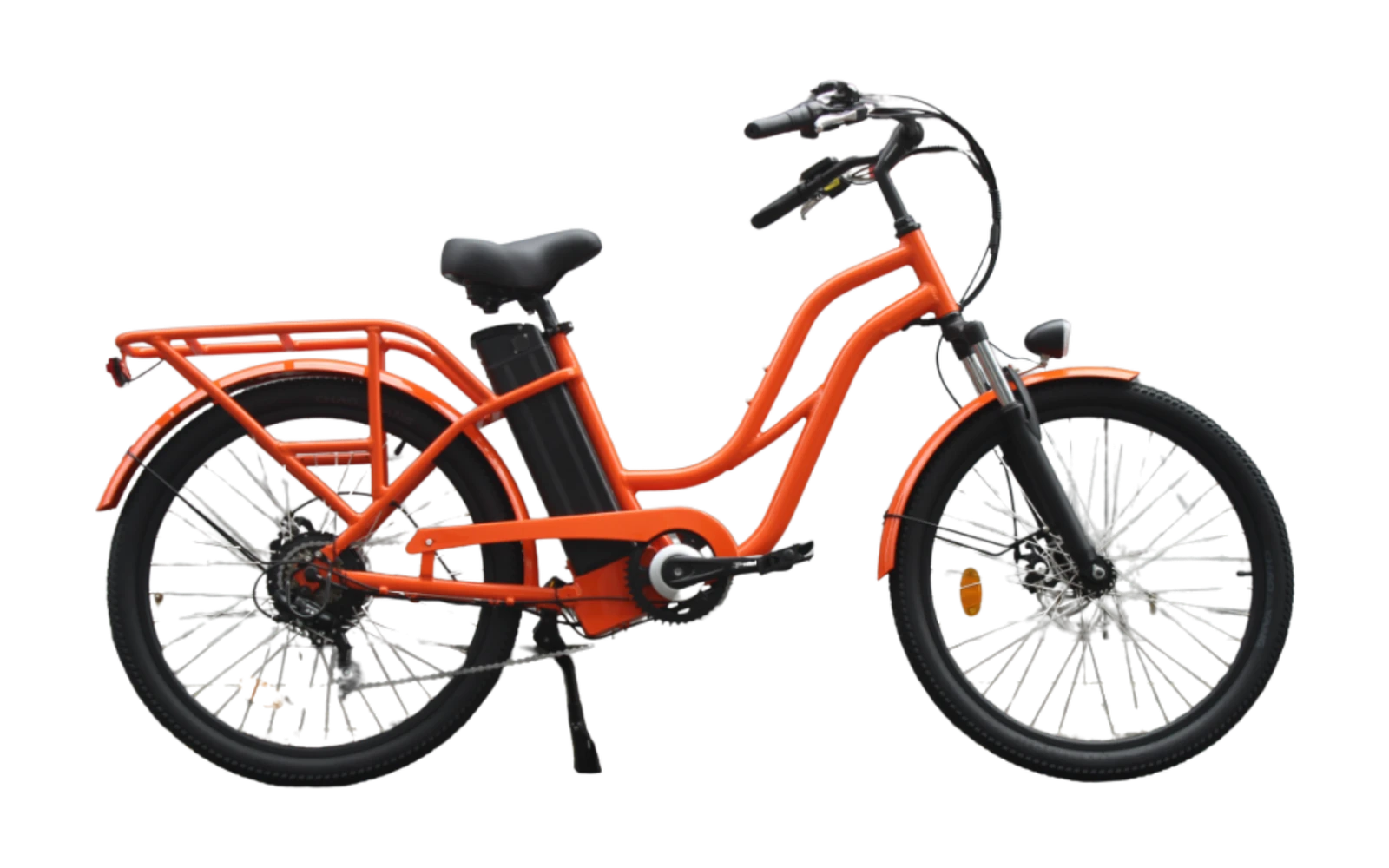
Bayo thought he had found a good deal
Bayo is not his real name. We have withheld his identity, but his experience reflects issues described to Shortmile by several delivery riders we spoke with while researching the e-bike market.
He needed an e-bike for full-time food delivery.
The offer looked simple enough: ₦6,000 a day, six days a week, for nine months. At the end of the repayment period, the bike would be his.
On paper, it looked affordable.
Then the controller failed.
Then it failed again.
By the time Bayo completed his payments, he had replaced the controller five times.
The battery that came with the bike also failed. Like many used imported e-bikes riders showed us, the battery had already had a previous working life before reaching its new owner. Bayo eventually paid for another battery assembled locally.
Then, two months after his repayment period ended, something much more serious happened.
While riding to deliver food to a customer, the folding frame failed and the bike broke into two at the folding point.
Thankfully, Bayo was safe.
But the bike he had spent nine months paying to own was effectively finished.
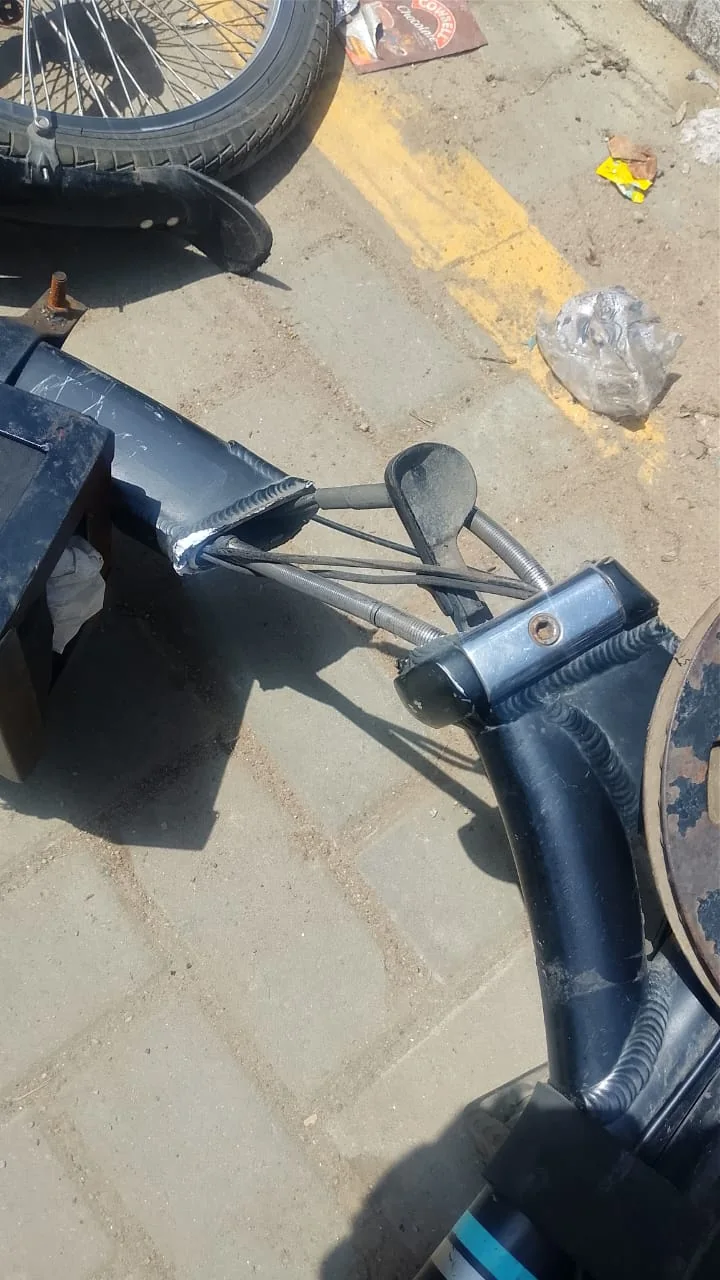
That experience raises a question every professional delivery rider should ask before choosing an e-bike:
What is this bike really going to cost me—not today, but over the time I depend on it to earn?
This is where total cost of ownership becomes more useful than simply looking at the purchase price or daily repayment.
A cheap daily rate can hide an expensive bike
When riders compare bikes, the first question is often:
“How much per day?”
That question matters. But it is only one part of the calculation.
For someone who depends on a bike for income, the real cost can also include:
- battery replacement;
- controller, display or motor failures;
- tyres, brakes, chains and other wear items;
- repair labour;
- difficult-to-find or incompatible replacement parts;
- days spent off the road waiting for repairs;
- income lost while the bike is unavailable;
- and how long the bike remains safe and commercially useful.
A bike with a lower initial price can become the more expensive option if it repeatedly stops working.
The cheapest bike to buy is not always the cheapest bike to operate.
Not every e-bike was built for delivery work
One of the biggest lessons from speaking with riders is that there is a difference between an e-bike that can move and a commercial vehicle expected to work repeatedly under delivery conditions.
Some bikes we encountered were older bicycles imported from Europe and later converted to electric.
Others had replacement motors, controllers or batteries fitted locally after the original components failed.
When we asked about some of these motors and controllers, riders and sellers told us that the components had no identifiable brand. That creates a problem when something eventually fails: the rider may not know exactly what part is installed, what replacement is compatible or what performance to expect from the replacement.
Batteries can present the same challenge.
Some replacement packs are assembled locally to reduce cost. In some cases, the manufacturer, grade or previous history of the cells cannot easily be verified.
That does not mean every converted or imported e-bike is poor quality. Many riders have used converted bikes successfully.
The point is that traceability matters more when the bike is your livelihood.
If you know the battery specification, motor, controller, display and other major components, maintaining the bike becomes more predictable.
Buying online? Supplier verification is only the first step
Large B2B marketplaces can make international sourcing easier, but a marketplace listing is not the same as technical due diligence or after-sales planning. Supplier badges, trade-protection tools and chat systems can reduce procurement risk, but they do not tell you whether a specific bike is suitable for full-time delivery in Lagos or whether its battery, controller, frame and replacement parts will be supportable later.
For regulated products imported into Nigeria, the Standards Organisation of Nigeria's SONCAP programme is the official pre-shipment conformity process. The practical lesson for a rider or fleet buyer is broader: ask for product identity, component specifications, test or certification evidence where applicable, and a clear after-sales path before committing money.
Lagos rain exposes weak electrical systems quickly
Commercial riders do not get to choose perfect weather every day.
During the rainy season, bikes are exposed to wet roads, heavy rain and repeated water splash.
Riders we spoke with told us that some motors used on converted bikes stopped working more frequently once the rainy season intensified. In those cases, inadequate protection from water became more than a technical inconvenience—it meant lost working days.
For a recreational rider, a bike being unavailable for a few days is frustrating.
For a delivery rider, it can mean losing income immediately.
That is why commercial suitability is not simply about motor power or how fast the bike can go. It is also about whether the electrical system, frame and other components are suitable for the environment and workload in which the bike will operate.
Downtime is part of the cost
Suppose a controller replacement costs less than a major battery repair.
It may appear to be a small expense.
But if the rider spends three working days waiting for the correct controller, technician or wiring modification, the real cost is larger than the repair bill.
The rider has also lost three days of productive work.
That is why professional riders should think about cost per productive kilometre and cost over the useful working life of the bike.
A bike is not productive while it is parked waiting for parts.
Battery quality deserves special attention
The battery is one of the most valuable components on an e-bike.
Its quality and condition affect range, reliability and replacement cost.
Before relying on an e-bike for commercial delivery, it is worth asking:
- What is the battery voltage and capacity?
- Who manufactured the cells?
- Is the battery new or previously used?
- Is the battery-management system appropriate for the pack?
- Is the charger compatible?
- Can a replacement battery be sourced later?
- Is there a clear specification for what should replace it?
A lower-cost battery may save money at the beginning, but if it deteriorates quickly, the rider pays the difference later.
For a delivery rider, battery quality is not simply a technical specification. It affects how many hours the bike can remain productive.
International safety frameworks also show why the battery should not be viewed in isolation. UL 2849, for example, evaluates the electrical drive train, battery and charger system combination of an e-bike. Standards differ by market, and this is not a claim that every bike must carry that exact certification; it is an example of why buyers should look at the complete electrical system rather than battery capacity alone.
Warranty and parts support also have economic value
No commercial bike is maintenance-free.
Tyres wear. Brake pads wear. Chains stretch. Bearings and moving parts need attention.
At Shortmile, maintenance remains rider-paid. We do not want to pretend otherwise.
But there is still a major difference between maintaining a bike whose parts and specifications are known and trying to repair a system where every failure becomes a new experiment.
Warranty support also matters.
A warranty does not mean nothing will ever fail. It means eligible manufacturing defects or covered components can be handled under defined terms.
Before choosing any e-bike, riders should ask:
- What exactly is covered?
- What is excluded?
- Who handles a claim?
- Are replacement parts available?
- How long might the bike be off the road?
These questions are part of total cost of ownership.
In Nigeria, the Federal Competition and Consumer Protection Commission states that consumers have a right to safe, good-quality goods that are reasonably suitable for their intended purpose. That makes clear specifications, warranty terms and honest product descriptions commercially important, not merely technical details.
What Shortmile is trying to do differently
Shortmile is not trying to be the cheapest e-bike in the market.
Our focus is on commercial suitability, component traceability and lifecycle value.
Our bikes are purpose-built cargo e-bikes with known component specifications, access to compatible parts through the Shortmile webshop, Rider App support, security equipment and eligible manufacturer-warranty support.
We also think carefully about load capacity, frame design and the kind of daily work delivery riders actually do.
That does not mean our bikes will never need repairs.
They will.
A delivery bike is a working machine. Working machines require maintenance.
The objective is to make ownership more predictable and to reduce the number of surprises that can turn a supposedly cheap bike into an expensive one.
A delivery e-bike is a productive asset
This may be the most important point.
For a full-time delivery rider, an e-bike is not a lifestyle asset.
It is a productive asset.
It has one central job: help the rider work safely, reliably and consistently enough to earn.
So before choosing a bike, do not ask only:
“What is the daily rate?”
Also ask:
“What exactly am I getting for that rate?”
Ask what the frame was designed to carry.
Ask what battery is inside it.
Ask who made the motor and controller.
Ask whether replacement parts are available.
Ask what happens when something fails.
Ask how many days you may lose if the bike cannot work.
And finally ask:
“Will this bike still be helping me earn after I finish paying for it?”
That is a much better way to understand the real cost of an e-bike.
Useful references for buyers and fleet operators
For readers who want to check the underlying buyer-protection and technical context, useful starting points include:
- Standards Organisation of Nigeria — SONCAP for conformity requirements applying to regulated imports into Nigeria.
- FCCPC consumer rights and responsibilities for Nigerian consumer-quality and product-information principles.
- General supplier-verification and trade-protection tools on major B2B marketplaces as a starting point for international due diligence—helpful, but not a substitute for checking product identity, component traceability and after-sales support.
- UL 2849 for an example of electrical-system safety evaluation covering the drive train, battery and charger combination.
- ISO/TS 4210-10 for an international reference on safety and performance requirements for two-wheeled electrically power-assisted cycles intended for private and commercial use.
These links are provided for independent reference. They do not imply that every Shortmile model carries every certification listed above.
Final thought
The cheapest bike today may not be the cheapest bike over years of commercial use.
For professional riders, the better comparison is not simply purchase price.
It is total cost over the bike's useful working life—including maintenance, parts, battery replacement, downtime, warranty support and the number of productive kilometres the bike can deliver.
That is the difference between buying an e-bike because it moves and choosing a productive asset because it has work to do.